Evaluating a backing-material supplier for automotive wire-harness tape requires more than comparing one basis-weight value or the lowest price. The backing must work with the tape manufacturer's adhesive, coating, drying, winding, slitting and installation process. The same fabric can behave differently with different adhesive systems and processing conditions. Procurement and material-engineering teams should therefore confirm the supplier's role first, then evaluate specification control, process compatibility, test evidence and document management.
First confirm the supply scope: backing substrate or finished tape?
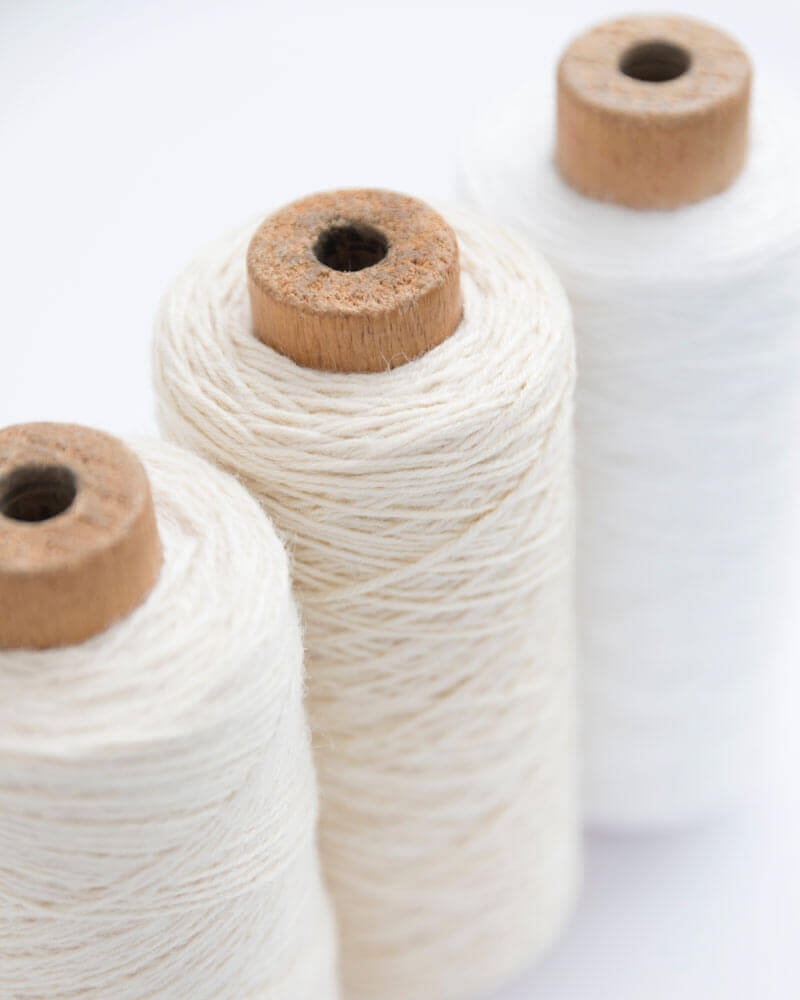
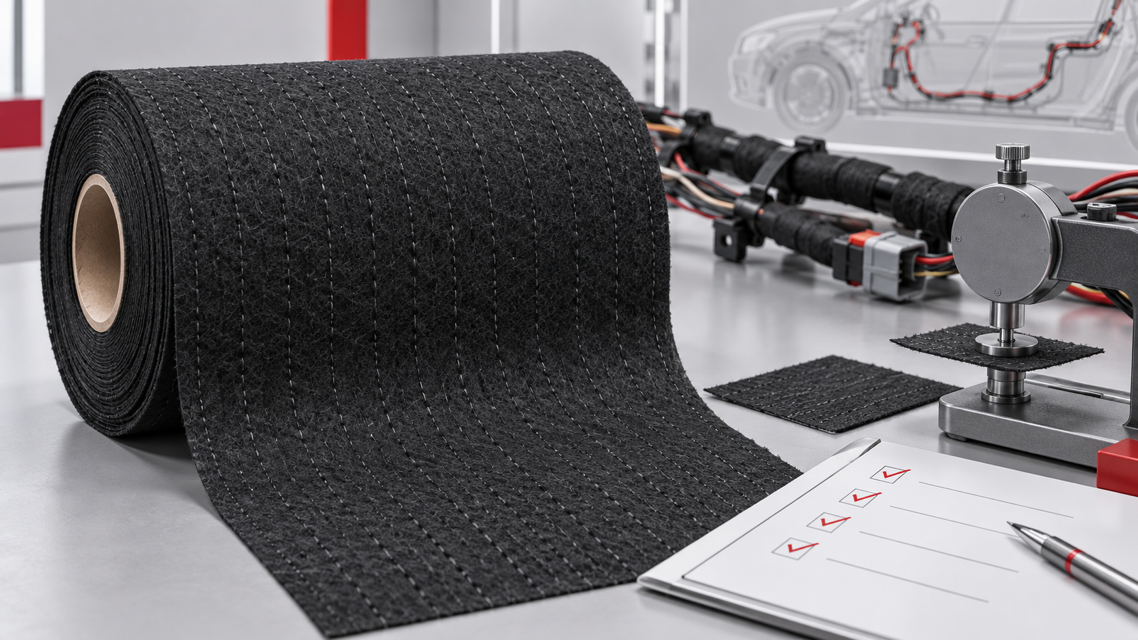
PET stitch-bond nonwoven can be supplied as a backing substrate, carrier fabric or base fabric for automotive wire-harness tape. A substrate manufacturer supplies the uncoated fabric. A downstream tape manufacturer selects and applies the adhesive system, then dries, winds and slits the finished tape. A website that says only “automotive tape” without stating whether adhesive is included can easily be placed in the wrong procurement category.
Seven supplier-evaluation checkpoints
1. Clear material and application definition
Confirm the fiber content, material structure and supply role. For a PET stitch-bond backing, the specification should clearly identify an uncoated substrate intended for downstream automotive wire-harness tape coating and slitting.
2. Specification range and tolerance control
Thickness, basis weight, width, stitch count, color and surface condition can all affect coating and the finished tape. Buyers should review not only nominal values but also the selected grade's specification, tolerances, sampling method and lot documentation. Not every thickness, basis weight and function is available in every combination.
3. Compatibility with coating and slitting
Surface structure and porosity influence adhesive penetration, coat weight, drying and anchorage. Provide the adhesive chemistry, coating method, target coat weight, drying conditions, slit width and desired unwind behavior. Confirm compatibility through a representative coating trial. A fabric specification alone cannot guarantee finished-tape performance.
4. Functional claims tied to a grade and report
Terms such as flame retardancy, low VOC, transverse hand tearability and noise damping should be tied to a specified grade, test method and current report. Evidence for one grade must not be assumed to apply to every backing or every finished-tape construction.
5. Quality-system and document control
Quality-system certification helps buyers assess process and document-management capability, but it does not automatically certify every product to every automotive requirement. Request the selected grade's specification, test reports and required documents, and verify the certificate scope and covered locations.
6. A defined sampling and qualification path
A practical evaluation normally includes requirement review, grade recommendation, samples, coating trial, slitting and installation testing on representative harness geometry. If a result does not meet the target, separate the effects of the backing, adhesive, coating conditions and finished-tape construction before deciding what to adjust.
7. Technical communication and supply continuity
A supplier should explain grade differences, available documents, change control and production conditions clearly. Buyers should also provide estimated volume and timing so that capacity, packaging and delivery can be reviewed. MOQ and lead time should be confirmed for the selected grade and current quotation.
What should an RFQ or sample request include?
- Finished-tape application position and primary function
- Target thickness, basis weight, width, color and hand feel
- Adhesive, coating, drying, winding and slitting conditions
- Hand-tear, noise, flame, VOC or other specified test methods
- Sample quantity, estimated monthly volume, production timing and document requirements
Jhih Cheng's automotive backing scope
Jhih Cheng Non-Woven Co., Ltd. was established in 1993 and manufactures 100% PET stitch-bond nonwoven backing substrates in Taiwan for downstream automotive wire-harness tape coating and slitting. Current public grades cover approximately 0.3–1.2 mm thickness and 80–250 gsm basis weight. Depending on the selected grade, characteristics available for evaluation may include flame-retardant performance, transverse hand tearability, noise damping, low VOC and compatibility adjustments for different coating processes. The specified grade and applicable report remain the controlling documents.
Jhih Cheng's quality management system is certified to ISO 9001:2015 and IATF 16949:2016. The two certificates displayed on the company website are valid from 14 September 2024 to 13 September 2027. Certificate scope and covered locations are defined by the certificates.
Frequently asked questions
Does Jhih Cheng supply finished automotive wire-harness tape?
No. Jhih Cheng supplies uncoated PET stitch-bond nonwoven backing substrates for downstream tape coating and slitting.
Can a backing be selected by basis weight alone?
No. Thickness, stitch count, surface, hand feel, adhesive system, coating conditions and finished-tape requirements should be evaluated together.
Do all grades have the same flame, low-VOC or noise-damping performance?
No. Functions and test evidence vary by grade. Confirm the specified grade and applicable report.
View automotive wire-harness tape backing specifications | Compare PET stitch-bond and needle-punched nonwoven | About Jhih Cheng | Contact us for specifications and samples